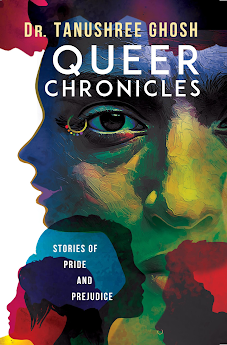
In 2021, I took part in the Blogchatter A2Z Challenge and
later brought out an eBook titled ‘Poetry – The Best Words in the Best Order’.
BLURB: The magic of poetry can never be denied, be it in any country or any language. It is the music of the soul. Samuel Taylor Coleridge defined it thus: Poetry: The Best Words in the Best Order." What better title could there be for a volume that eulogizes poetry, and waxes eloquent about classic poems with a wealth of meaning within?
THE CONTENTS: Have you ever imagined delving into a treasure trove to pick out little gems glittering on the surface of your palm? That is how I felt when I began to sift through the classic poems over the ages. My favourites were all going into the mix.
Unsplash Image
A. ABOU BEN ADHEM BY LEIGH HUNT
B. BECAUSE I COULD NOT STOP FOR DEATH BY EMILY DICKENSON
C. CLOUDS AND WAVES BY RABINDRANATH TAGORE
D. DO NOT GO GENTLE INTO THAT GOOD NIGHT BY DYLAN THOMAS
E. EARTHLY PRIDE BY ELLA WHEELER WILCOX
F. FACES BY SARA TEASDALE
G. GOD’S-ACRE BY HENRY WADSWORTH LONGFELLOW
H. HUMAN NATURE BY EUGENE FIELD
I. IF BY RUDYARD KIPLING
J. JOURNEY BY EDNA ST. VINCENT MILLAY
K. KRISHNA, YOU KNOW ME NOT BY SUGATHA KUMARI
L. LA BELLE DAME SANS MERCI BY JOHN KEATS
M. MENDING WALL BY ROBERT FROST
N. NIGHT OF THE SCORPION BY NISSIM EZEKIEL
O. OZYMANDIAS BY PERCY BYSSHE SHELLEY
P. PALANQUIN BEARERS BY SAROJINI NAIDU
Q. QUAINT SPRING BY GEORG TRAKL
R. REMEMBER BY CHRISTINA ROSETTI
S. STOPPING BY WOODS ON A SNOWY EVENING BY ROBERT FROST
T. THE ARROW AND THE SONG BY HENRY WADSWORTH LONGFELLOW
U. ULTIMATUM BY DOROTHY PARKER
V. VOCATION BY RABINDRANATH TAGORE
W. WE WEAR THE MASK BY PAUL LAURENCE
DUNBAR
X. X BY JEAN VALENTINE
Y. YOU ARE OLD, FATHER WILLIAM BY LEWIS CARROLL
Z. ZINNIAS AND TEA BY RANDALL DAVIS BARFIELD
THE BEGINNING:
‘Abou Ben Adhem’ by Leigh Hunt has always been ensconced
within my heart. It is my mother’s favourite, a poem she quotes every time she
speaks in public. It eulogises the significance of being one who loves his
fellow beings, a relevant poem in a world in which the moral fabric seems to
have been ripped apart.
My idea in writing this book was to transmit the beauty
of the poems in their entirety, speak about their main themes and the poets.
1.
ABOU BEN ADHEM
Leigh Hunt

Public Domain Pictures.net
Abou
Ben Adhem (may his tribe increase!)
Awoke
one night from a deep dream of peace,
And
saw, within the moonlight in his room,
Making
it rich, and like a lily in bloom,
An
angel writing in a book of gold: —
Exceeding
peace had made Ben Adhem bold,
And
to the presence in the room he said,
"What
writest thou?"—The vision raised its head,
And
with a look made of all sweet accord,
Answered,
"The names of those who love the Lord."
"And
is mine one?" said Abou. "Nay, not so,"
Replied
the angel. Abou spoke more low,
But
cheerly still; and said, "I pray thee, then,
Write
me as one that loves his fellow men."
The
angel wrote, and vanished. The next night
It
came again with a great wakening light,
And
showed the names whom love of God had blest,
And
lo! Ben Adhem's name led all the rest.
One night, Abou Ben Adhem awoke from ‘a deep dream of
peace’ to see an Angel writing in a book of gold, recording the names of those
who loved the Lord. To Abou’s disappointment, his name was not one of
them.
Abou stayed
cheerful and requested the Angel to put down his name as one ‘that loved his
fellow men’. The Angel finished writing and disappeared.
The next night, the Angel reappeared
with ‘a great wakening light.’ As Abou looked on, the Angel revealed the names
of those blessed by the Lord.
‘And lo! Ben Adhem’s name led all the rest.’
What a beautiful message the poem conveys! Its central idea
shines out as clearly as the Angel’s light in the dim room. When you love your
fellow men, you become worthy of being loved by God. The poem embodies the
idea ‘Love thy neighbour as thyself.’ If only the whole world could follow this
tenet, what a peaceful place it would turn into!
The Poet: Leigh Hunt (1784 –
1859)
James Henry
Leigh Hunt, born in 1784, played a significant role in the Romantic Movement in
England. He was a prolific poet, essayist and journalist. His poems were
lyrical and vividly descriptive and imbued with atmosphere and mood.
THE REPERTOIRE:
Over the entire month, I breathed poetry, choosing poems
that would touch the hearts of my reader and writer friends. The challenge was
to find a beatific blend of English, Indian and American poets.
ENGLISH POETS:
In school, I was enthralled by a poem by the Romantic
poet, John Keats, titled ‘La Belle Dame Sans Merci’, the saga of the beautiful
lady without mercy who entrapped men and then left them high and dry.
‘Ozymandias’ by PB Shelley talks about the ruin of the
statue of an erstwhile monarch. Over time,
tyranny and boasts come to an empty end, just as the giant statue that now lies
in ruins, a travesty of its past glory.
‘Remember’ by Christina Rosetti is
a sonnet of grief, dealing with the themes of life, love and death where the
poet exhorts her lover to remember her even after she has moved to the realm of
death.

Unsplash
Lewis
Carroll is best known for his ‘Alice in Wonderland’, but it was his amusing
poem ‘You Are Old, Father William’ that fit in perfectly in this repertoire. This poem appears in Chapter Five of Alice in Wonderland. When Alice
complains to the caterpillar that she is losing her memory, the latter advises
her to recite this poem to test her memory.
‘Do
Not Go Gentle into That Good Night’ by Welsh poet, Dylan Thomas, is a poem in which a son exhorts his aged father to fight against death
and not fade away gently into the night.
INDIAN POETS:
The magic of Indian poetry in English can not be denied.
It was when I began to look that I discovered so many outstanding examples.
‘Clouds and Waves’ by Rabindranath Tagore is evocative. Tagore’s poetry is known for its sensitivity and
its tenderness. This poem is especially beautiful as the poet shares
his tribute to the vivid imagination of a child.
Rudyard
Kipling’s ‘If’ is one poem loved by many. The poem is replete with sound advice and
inspiration on how to live life and face its challenges.
If
there is one poem that moved me with its passion and imagery, it is
‘Krishna, You Know Me Not’ by poet Sugatha Kumari, translated from Malayalam by
Ministhy S. Nair.

Pexels
It is a classic poem, describing the feelings of an unknown gopika who
sings her heart out, but who has kept away from the beautiful, blue-bodied Krishna.
The refrain, 'Krishna, You Know Me Not' comes at the end of every
stanza.
I
enjoyed teaching ‘Night of the Scorpion’ by Nissim Ezekial when I was in
school. The poet describes a rainy night when his mother
was bitten by a scorpion. Couched in simple language, the poem reveals superstitions
and attitudes commonly found in villages and small towns.
Another delightful poem is ‘The Palanquin Bearers’ by
Sarojini Naidu, the Nightingale of India. In olden days, brides were carried on beautifully decorated palanquins
by sturdy palanquin bearers who considered this a privilege. 'Palanquin
Bearers' brings this joy alive in the delicate usage of images and the refrain
that goes along with the movement of the palanquin bearers.
Tagore’s
poem ‘Vocation’ gives voice to a little child who wishes to be
free. The child envies people like the bangle seller, the gardener and the
watchman, who appear to be free and unfettered. He sees the freedom they enjoy,
but not the toil and the hardships that go with their jobs.
AMERICAN
POETS:
Emily
Dickenson (Because I Could Not Stop for Death), Robert Frost (Mending Wall and Stopping
by Woods on a Snowy Evening), and HW Longfellow (The Arrow and the Song) all found
their own niches. I was filled with wonder when I came across other works that greatly
impacted me.
Ella Wheeler Wilcox’s 'Earthly Pride', a poem of four
lines, conveys the futility of pride on earth.
‘Faces’ by Sara Teasdale talks about how she can pierce
through the masks and facades of the people hiding secrets within themselves. Ironically,
people were wearing masks to combat the deadly Corona virus.
Eugene Field’s ‘Human Nature’ describes the poet’s
disappointment when a beggar, to whom he offers a dime, buys a loaf of bread instead
of drinking a toast to him.
A few more poems studded my list, but due to paucity of
space, I decided to leave them out in this post.
Thesaurus.com