Sunday, March 22, 2020

Those Were the Days


                                                                         SparkPeople

Do you remember those days when children played outside with their friends? Wide, open spaces when they didn’t have to worry about being mown down by speeding vehicles, or falling into open potholes, or being accosted by strangers. Those were the days when families lived together, and everyone knew every other person. Those days when life was simpler, and technology was a word that hovered somewhere in the future.

Children grew up together, playing rough and tough games, wallowing in the mud, unabashed about getting their clothes dirty. They climbed trees, plucked green mangoes, and often came home, covered with scratches and reeking to high heaven. Their spirits would be high as they scrambled to have cold water baths, squealing with glee as they saw tiny rivers of dirt flowing into the sink hole.

Once they were squeaky clean, they would often sit together, as the twilight hour spread its mantle over the evening, and their grandmothers or aunts would come outside, their faces illuminated by the flame of the lamp in their hands, chanting, “Deepam, deepam”. The children, and the adults, would pray together as the lamp was placed on the little stone platform outside, in the midst of which a tulsi plant would grow, tenaciously fighting to survive all onslaughts of weather.


                                                                   Quora.com


This was the hour when the elders would chant prayers in their sonorous (or otherwise) voices, and children would have to repeat them after, one reason why most children in the generation could rattle off mantras in a jiffy, I, for one, remember chanting two whole chapters of the Bhagavad Gita all because my grandparents and I would sit and chant them together, in a large prayer room, which abounded with the idols of every god in the Hindu community. As a little child, I had my favourites – a tall blue Krishna who had a mischievous smile on his face, a pot-bellied Ganesha who always remained in my heart, and numerous others I loved to look at because they were so beautiful. In fact, my sisters and I used to play a guessing game which consisted of identifying different idols by just their description.

I often wondered about my relationship with God. It was not as intense as the one that my grandparents had, as they spent three hours in the morning and evening, to complete their prayer sessions. My parents never forced me or my sisters to pray… in fact, the only time I did pray was at night just before I went to bed. I would read my book and when I felt that my eyelids were closing, I would pray for my whole family, for my friends and for all those who were in my mind at the time. Even today, the litany continues, and while the essentials haven’t changed over the years, many other names have crept in, and when I finally drift off to sleep, I feel a sense of contentment; a feeling that my prayer could just have reminded God to keep my loved ones safe.

What I do remember of my childhood days is that there was a sense of peace and contentment that drew us all in. I recall the various schools that I attended, my dad having been an Army officer, the ease with which I sailed through classes, happy because I could play games in the evening with my friends. Games like Hide and Seek, and Dodgeball, Seven Stones and Aeroplane, games that built up our stamina and made us sweat. Books were strewn around all over our house, and reading was a habit that crept in naturally, and stayed forever.


lifebeyondnumbers.com


                                                                thebetterindia.com

Monsoons were no problem. There were days when I got drenched on purpose and survived. On other days, we sat and played board games like Scrabble and the ubiquitous ‘Name, Place, Animal, Thing.’ My dad got me interested in stamps and match labels. I still remember those beautiful stamps from Zambia in interesting shapes… luminous triangles and rectangles that I could never stop looking at. Match labels were a different kettle of fish. Dad and I used to put the labels in water and wait for the glue to come off. Then we would gently unroll the label, dry in and stick it in our albums. We had one album each and prided ourselves on our unique collection.


                                                                   stampworld.com

My little sister was born when I was seven. So, till then, I had the rule of the roost. My favourite pastime was sitting outside in the afternoon, when everyone else was enjoying their siesta, and making mud pies with my little kitchen set. I could sit for hours, creating little tea parties for my dolls, all of whom had filmy names like Sapna, Sandhya, Sadhana and the like.

One day, I laid hands on a foreign magazine from a second-hand store, and I fell in love. For the first time ever, I gazed in fascination at paper dolls, which I could cut out along with a whole wardrobe of clothes that could be put on them. After that, there was no looking back. I collected over a hundred paper dolls, christened them all, created families and careers and lives around them all. Fred and Frank were farmers, Penny, Daphne, Betsy and Barbara were from different walks of life - ballerinas, teachers, school children, party folk. In short, I had a whole fun family of imaginary people.


                                                                      Allsorts - TypePad

My sisters loved my paper dolls and they could play with them only as a rare treat. I clung on to them (the paper dolls!) till I went to college, and then I reluctantly handed them over to my little sister, who was obviously elated.

Those were the days. The days when the word ‘bored’ did not appear in our dictionary, and we could keep ourselves occupied on our own. Social media was an unknown term. Even the television appeared only when I was in high school and Chitrahaar and the weekend movie were the only two programmes that we enjoyed watching. Later, of course, Doordarshan came out with some wonderful serials which we all devoured.

It seems strange to think back on a time when there were no computers, mobile phones, data sticks, USBs, WI-FI and the like. However, what we did have was quality family time, the great outdoors and hours of concocting games and hobbies to keep our interests alive. As children, we were tough. Parents did not believe in sparing the rod, and I think we grew up the better for it. ‘NO” was a word that was used often and there were no innuendoes hovering around, waiting to fall on our heads like Chicken Licken’s sky. No hints of psychological trauma resulting from a scolding, a declined party invitation or a stern note from a teacher. Oh yes, teachers had the liberty to chasten, ground or punish and there was not a squeak from the parents or the students. In fact, many of these students came back to thank their teachers for having moulded them into good human beings.


                                                                    Keep Calm-o-Matic

The Corona virus has invaded our lives, forcing us to spend time at home with our families. It has grounded us and made us rethink our priorities. For some, this enforced solitude is a punishment, a time to bite their nails into jagged ends and chafe at the confinement.
For many others, it is a time of reconciliation, of spending magical moments with their children and loved ones at home, of discovering the simple joys that they had been taking for granted.


Thursday, March 19, 2020

'Stay At Home! Quarantine!'


Social media does come out with the most unbelievable videos. The other day, when I was browsing, the title leapt out at me.
“World's Shortest Horror Movie”
Being a horror buff, I couldn’t help but peek at it. It was truly horrific.
Several passengers wait at a bus stop on a rainy day. As they huddle together, one of them coughs and spits into a large puddle on the road right in front of them. Suddenly a bus speeds by over the puddle, drenching all of them in water, and in today’s scenario, maybe even a virus that could infect them all. Horrific, indeed! For those wanting a peek, here's the YouTube link:


Corona virus is in the air, literally. And in droplets and infected hands and all surfaces in the world touched by humans. One glance around would make you feel as if you are in a sci-fi movie, with masked minions whose eyes dart around in trepidation. Spaces which were once crowded are now deserted, shelves in supermarkets as bare as Old Mother Hubbard’s cupboard. Airports are cancelling empty flights, while travellers sit, cowering in remote corners, hoping against hope that they are not seated next to coughing or feverish passengers.

Different governments have geared up to fight the virus in varying degrees. While many nations struggle to contain the virus, India, I am proud to say, is at the forefront, with Kerala, I am even prouder to say, being the epitome of efficiency. The erstwhile Nipah virus, which was more virulent, was handled wonderfully by the tiny state and contained. Those lessons have come in handy today in the days of Covid-19 as well.

In general, the population is taking all precautions possible to remain uninfected. Washing hands with soap and water, using alcohol-based sanitizers, refraining from touching their faces often, using Namastes instead of the usual hugs, and remaining glued to every health update that comes from the government.

However, the human race does have its share of idiots, in many cases, educated ones, who think that they are a rung above the rest. It is these people who sneak out of airports, hospitals and quarantine centres, thinking inanely that the sky will not fall on their heads. Albert Einstein put it, “Two things are infinite: the universe and human stupidity; and I’m not sure about the universe.

Take the example of three folks who deliberately omitted to mention to the Cochin airport authorities that they had been to Italy, because they had finally boarded from Oman. One would think that once they had sneaked out, they would stay in hibernation and refrain from floating all around the city. No such luck. These characters went to a mall, attended a church function, and walked into every relative’s house in the vicinity. Tracking their trail was an onerous task, but it was done as a huge number of unsuspecting people came under the scanner.
What about the wife of a Bangalore techie who escaped to Agra the moment her husband displayed symptoms of being infected? They had honeymooned somewhere in Europe and once he was in quarantine, she made a run for it and disappeared. Sadly, she did not leave out any mode of travel; she took a flight from Bangalore to New Delhi, embarked on a train to Agra and finally got to her parents’ home by cab. One cannot even imagine the number of people she infected on her madcap adventure.

Finally, when the health officials traced her to her parents’ home, her father tried to put them off the trail, insisting that she had gone back to Bangalore. She was discovered inside the house in the company of eight other family members, and it took the presence of a District Magistrate to get them forcibly across to the district hospital for screening.
Shakespeare had something to say in such a situation. “Both stupidity and wisdom are as infective as the flu.” In the above case, one does not need to be a genius to figure out which category the subject falls into.

One British gentleman sauntered out from the hill station of Munnar in Kerala where he had been under quarantine and made his way to Cochin airport where he was tracked down by health officials after having tested positive for Corona virus. Seventeen others in his group are also under quarantine. 250 passengers who had boarded the flight were taken off, made to undergo tests and they finally took off, amidst frayed tempers and the realization that inanity makes the world go around, even if it was after four hours of delay.

My sister had a different story to tell me about a colleague of hers who went abroad, came back via Germany and was told not to come in to work. Fourteen days of quarantine stretched before her like a never-ending highway of fun and frolic and she went off to the nearest skating rink to work off all that energy. By the time she returned home, she had not only developed a cough and a fever, but also infected all those unwary skaters who had no idea how close they had come to stupidity.

When, at the beginning, the Creator was giving out body parts, grey matter must have been in short supply. How else does one explain why certain people behave the way they do, given that they are in the midst of a global crisis? Is it because they feel that the world revolves around them or that they are invincible? Whatever the cause, when there is a pandemic on, there is no gainsaying the fact that a few irresponsible folks can cause a whole lot of damage by pretending to be ‘cool’. Such people need to be prosecuted, especially if they have put others in danger through their selfishness.

There is a huge group of like-minded people in the world today, slogging to contain the spread of this virus – the medical community, the travel community, the airline staff, scientists, laboratory testers, Anganwadi workers, good Samaritans making masks, sanitizers and liquid soap for hospitals and for the general public, educators, shopkeepers… all significant links in holding the community together. Hats off to these amazing, benevolent people!

The common slogan is, “Stay at home! Don’t expose yourself to large crowds. Maximise social distancing.” Weddings, large parties, gatherings and celebrations have been brought down significantly. However, just when one decides to heave a sigh of relief that the virus is being contained, there comes a news item of some religious event that cannot be curtailed because it would hurt the sentiments of the said community. Hearts sink at the sight of hordes of people getting together with one common thought. “God will not harm us, because we are performing this ceremony with reverence and faith.”

Unfortunately, the Corona virus appears to have a mind of its own. It spreads with alacrity, from person to person, through a random sneeze, a chance hug or an innocuous kiss. The fact remains that God helps those who help themselves, and if keeping away from large crowds is what helps us, then that is what God wants us to do as well. Friedrich Schiller obviously meant what he said. “Against stupidity, the gods themselves contend in vain.”


Friday, March 13, 2020

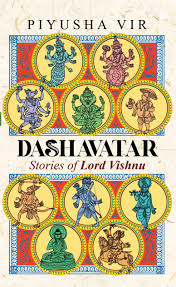
Dashavatar - Stories of Lord Vishnu by Piyusha Vir


I remember first hearing the stories of Lord Vishnu at my grandmother’s knee, when she, a deeply religious lady, would describe the various avatars in graphic detail. I would listen, wide-eyed, entranced as she turned into the mischievous Krishna, the diminutive Vamana, the steadfast Rama and of course, the majestic Narasimha, half man, half lion. After one such recital, I remembered eyeing every pillar with awe, never sure if the image rooted in my imagination would spring out and catch me unawares.

So, when I set out to read Piyusha Vir’s ‘Dashavatar’, published by Readomania, I looked forward to going back to my childhood.

The prologue fascinated me. “When I first set out to write the stories of Vishnu, little did I know what a gigantic cauldron of wealth I was diving into.” How true, especially as the author ended by saying that her aim was to take a second look at the stories and analyse how they fit into contemporary society.

The stories themselves are easy to read, as mellifluous as my grandmother’s narration. However, what comes across is what I missed when I was little – the glaring parallels across history and mythology, with references to the Great Flood, and the emergence of a saviour every time the world reeled under the burden of evil. Manu, the first man in the New World could easily be Noah, his gigantic boat the Ark with two species of all animals, plants and seeds aboard it.

Modern axioms dot the pages of this book of ancient stories. For instance, before the churning of the ocean, Vishnu advises the devas. “Diplomacy and tact are as important as your physical strength. Remember, often there would be times when you need to make friends out of your foes.” Don’t those words ring a bell concerning the political arena even today?

What about the Halahala Visha that emerged from the ocean, potent enough to allow darkness to rule the mind and negativity to rule the heart? Any thoughts on that?

“Arrogance, pride, and greed for power dictated the actions of the asuras. They terrorised the people, ruled with threat and fear, and indulged in acts of mindless cruelty.” Vishnu’s Varaha avatar appeared, as did every other avatar, to deliver good and erase evil. The unscrupulous avarice of mankind and its corrupt and vile practices paved the way for the cleansing of the world by ridding it of their insidious influences.

Lord Brahma comes across as an over-kind deity, granting vows at the drop of a hat, and one can hardly dare to wonder if this could be attributed to his lack of judgment or to the overweening play of Fate.

The story of Lord Rama and his Sita proves that, over the centuries, man’s attitude towards women has not changed in the least. As one citizen in the court, blinded by years of patriarchy, said smugly, “Then why did she do what she was not supposed to – step outside her boundaries, that is, when clearly instructed not to? Should she not be punished for that?” According to them, Sita was to be set up as an example to any woman who stepped outside the boundaries of maryada and made to suffer the consequences. Chilling sentiments, that are being followed to this very day, sadly!

Krishna tells the villagers to worship the rains, the land, the crops and the mighty mountain, instead of indulging in frivolous festivities in the name of blind faith, words that still echo, over the centuries.

Dashavatar stands out, not only for the nature of its story telling, but for the truths it expresses so tellingly. The apt illustrations and the classic cover pique the imagination as well. I have no hesitation in saying that this book is one that can be savoured by all age groups.

As I set this book down, I do so with a sense of shock and awe. The tenth avatar of Vishnu, Kalki, is yet to be manifested, a winged being on a white horse holding a sword. “He shall appear when basic humanity would have ceased to exist and we, as a world, would have reached deplorable levels of cruelty and depravity. The predictions say that only the evil and the corrupt will rule the world. Power and money will become the only criteria to judge a person’s worth.”

I can almost hear the rustle of wings…


Wednesday, June 26, 2019

FREEZING IN JOHANNESBURG


                                      cold-weather-cartoons - clip art - free clip art - NX91jd

Being a grandma is the most fun one can think of, but the cold in Johannesburg is another thing altogether. Absolutely wrong timing, I say, having a baby at the start of winter, when wet wipes, bum cream, diapers, cold hands and red, flowing noses are the norm. And with a brand new baby in hand, one who is so tiny that he gets lost in his clothes, the cold gets to one all the more.

Let me speak for myself. I, for one, love winter when it is just right, along with a steaming hot cuppa green tea, a warm shawl, thick socks and just a nip in the air. However, when the temperature drops and I cannot feel my toes, and wooden toilet seats feel better than ceramic ones, it is time to tuck in and hibernate.

Green Tea cartoon clip art - KISS png

Grandmas, of course, cannot hibernate. They are the go-to persons as far as the first hand chores go. Not that I mind, because the warmest I feel is when I wash dishes in water scalding enough to take my skin off. Priyanka, my daughter, clucks impatiently as she almost burns her hands after I have had a go at the dishes. But anything to stave off the cold, I tell her.

 Washing Dishes - Cliparts Zone

Going out is a chore in itself. I lug on the layers, blow on my icy hands, and rush into the car which is mercifully heated. Likewise, the baby’s bedroom is heated and it is bliss to stay ensconced within the duvet till the time it is time to burp, change or rock the baby to sleep. Four of us snuggle in the warmth of the heater – Grandma, mama, and the two kids, though the big sister, Zoya, sleeps in her own cot, replete with a pretty duvet, a sparkly unicorn, a bald baby doll and a sequinned bunny. Of course, we need to check whether the warm, furry thing on the bed is the cat, Tyrion, who loves a quick snuggle himself.

When we got here in May, the weather was perfect – sunny days and balmy evenings. June waltzed in with the chill setting in. At first, I couldn’t understand why people around smirked when I asked them if it was going to get colder soon. Now, I know! As the old song goes, “The rain in Spain falls mainly on the plain.” In my case, the chill in Jo’burg falls mainly on my bones! Or is it Jo’brrrg!     
Orcas Issues
            
Come morning, husband dear gets togged up in his warm jacket, his woollen cap and his gloves and sets off on a brisk walk. “Coming for a stroll?” he asks. One look at my horrified face is enough to elicit a chuckle as he strides off in true military style. As a result, despite the rich food we eat here, he looks the same, even as, in my case, I find calories sneaking in and making their homes in my entrails. Or wherever it is they hide away!

June is on its way out and if I were to misquote T S Eliot, I believe that July is the cruellest month. Temperatures are going to drop further, and I can only imagine the state that I will be in... Frozen, and in no state to mimic Elsa and sing ‘The cold never bothered me anyway.” (Let It Go)


Elsa - Frozen - PopSugar

Instead, I will be like an Eskimo, covered from head to toe, just my eyes peering out from within the layers, attempting to hibernate as much as possible. Probably scaring myself when I peer into a mirror and see visions of a Death Eater, courtesy Harry Potter. Cloudy skies, freezing winds and a frost that bites into the bones... time for braais and barbeques, warm fires and hot beverages, desperate glances at the elusive sun and new woollen clothes that hopefully look smart. So folks, if you do not hear from me in July, think of my fingers wrapped in mittens, unable to type, as I contemplate on the month of August when the cold starts abating, maybe by the 14th or so. Shucks, the day we leave for the warmer climes of India!

Braai PNG Images Braai Clipart Free Download Source · Meetings 2014 2015 Toastmasters Antwerpen


For as P B Shelley put it so aptly, “If winter comes, can spring be far behind?”


Tuesday, April 30, 2019

FAITH 40 INSIGHTS INTO HINDUISM by DEVDUTT PATTANAIK


Hinduism has always been an all-encompassing religion, willing to adopt and adapt the best from other fellow religions. In his latest book titled ‘Faith 40 Insights into Hinduism’, Devdutt Pattanaik creates a master list of relevant questions and answers them all in a simple and fascinating manner. Every chapter begins with a query that has often been asked by the lay person, and the author unravels each mystery in his own engaging fashion, enhancing the experience with his own little illustrations. The yellow hard bound cover with silver lettering strikes the eye like a ray of sunshine, or like the silver lining that indicates the presence of the sun.

The book is divided into four sections: Belief, Customs, Scriptures and History. The author puts forward his reasons for writing this book. He wants people to view Hinduism with a more forward–looking gaze, not allowing it to remain confined to a time, a geography or a scripture. Thus, he strives to make it relevant to ‘contemporary space and time’, keeping in mind that ‘nature is diverse, culture is dynamic.”

The first section on Belief elaborates on concepts intrinsic to Hinduism like the beginning of the world, the religion as mythology, the significance of gurus, views on death, suicide, karma, patriarchy, the caste system and yoga, as the author connects the past with the present. The author stresses on the fact that Hinduism is rooted in the idea of rebirth (karma) and the material world, though self-sustaining and self-created dependent on a spiritual principle (atma).

The chapters have intriguing titles: ‘Can rakshasas or asuras be called the Hindu devil?’ and ‘Is Hinduism’s Narasimha like Hollywood’s Wolverine?’ thus creating a curiosity in the mind of the reader. The debate about Hinduism being feminist or patriarchal is cleverly argued, as is that about Hindu views in death and suicide.

In section two, titled ‘Customs’, the author starts with what rituals are. “Rituals are full of colour and fragrance, gestures and songs, stories and performances, food and music and clothes. They make Hinduism visible. Without them there is no Hinduism to see or hear or smell or touch or taste.” How evocative is this, as every word conveys the emotion that is Hinduism.

Other interesting questions are thrown up in this section. Why do Hindus worship idols and light lamps? The latter question finds a fascinating answer, one not commonly known by many. Another rare explanation is on the sacred thread and how it embodies Vedic wisdom. The author also raises a pertinent point about how the world craves vengeance in the name of ‘justice’ by keeping alive the ills of the past, and using them as fodder for the present. He also talks about vegetarianism and how turning ‘blood’ into contamination forms the basis of ‘untouchability’, which is a dangerous idea. In my opinion, this idea, seen in the light of Sabarimala, is what makes the issue a highly sensitive one.

The last two sections revolve around Scriptures and History. The author gives us an overview of the Vedas, as also that of the Tamil Veda that consisted of three books, which marked the rise of the bhakti movement of India. The Manusmriti speaks of the code of conduct for human society, pertaining mainly to Brahmins and Kshatriyas, and remains a significant book on dharma-shastra as it documents the prevalent social practices of its time. A time did come, however, when it was seen as the source of India’s inequalities as people felt that it institutionalized the caste system.

Further questions are asked and explained. Did the Aryans come into India or spread out of India? Why do we give race so much of importance? Were the Hindus casteist? And interestingly, is the samosa Indian or Vedic?

Forty questions are asked and answered in simple terms by an author who is well-versed in Hindu philosophy and culture. The final truth that he puts forth puts things in perspective. “Hinduism does not believe in changing people’s minds or replacing old ideas. It believes in expanding their minds and adding new ideas. Hence, there is no need to convert, just enlighten, empathize and accommodate.”


Thursday, April 4, 2019

Remember When by Preethi Venugopala


“Remember when I was young and so were you…”

Remembering is what Tara does best, wallowing in the past, a past which has left deep scars on her. Her relationship with Ranjini, her obnoxious sister, is confrontational, as the latter perceives her as a threat, surprising since she is the rich, pampered one who seems to have the better life.

As Tara goes to pick up her five-year-old, Aryan, she runs into her best friend from college, Rupa, who is now an entrepreneur dealing in Kerala art murals. The two friends bond over tea, as secrets from the past tumble out, along with the name of Manu that has never been mentioned in the home of Tara and her husband, Karthik. There is a hint of a mystery that tantalizes the reader.

“Tara’s impulsiveness had left in its wake broken hearts and lives, including her own.”

Tara’s first novel is all set to be published in Chennai, on the 1st of December, a long-cherished dream. Much of her childhood has been spent in Kannur. She has memories, good and bad, about that period in her life, when Manu is the luminescent star around which her life revolves. Though they are from different communities, life couldn't have been more perfect, with Mary, Manu’s rich and widowed mother, also accepting her whole-heartedly.

However, their worlds come crashing down, when one misunderstanding pushes them apart, and Mary and Manu leave for Chennai, leaving their past behind.

However, years later, fate intervenes to bring them together once again, as Tara gets stranded in the floods in Chennai, and is forced to accept Manu’s hospitality to tide over the period. Her son, Aryan, soon wins over Mary and Manu with his winsome personality.

As the floods continue, a few more guests who are stranded in the floods make their way to Manu’s home. This includes Rupa, Tara's old friend, and her fiancĂ©, Pratheesh. As the water rises, people from the ground floor are evacuated to Manu’s house as well.

Preethi Venugopala narrates a tale that transcends the normal love story, weaving in the Chennai floods as a backdrop. She describes the survival techniques used in the actual floods as a part of Manu’s website. Varun Chinnappa, a popular You Tuber and travel blogger, turns into his enthusiastic assistant as he creates a video on rain catchers and sterilising drinking water that soon goes viral. The stories of the various characters that have been brought together by the floods reveal facets of their lives which sound familiar.

Once the floods recede, it is time for them all to bid adieu to one another. However, there is still a secret that hovers in the air, one that needs to be spoken of, even if it could wreak havoc in Tara’s life. Meanwhile there are other questions as well. Why has Karthik, Tara’s husband, not called her even once despite the fact that she and Aryan are stranded due to the floods? What is the decision that Tara has to make about her future, and how will it affect her relationships?

Preethi Venugopala keeps the reader guessing till the very end. While this is a story imbued with romance, there are elements of suspense in it that keep the reader hooked on. 


Thursday, March 7, 2019

THE WORK-AT-HOME MILITARY WIFE by Chandana Banerjee


The blurb prepares you for what lies within – “A quickstart guide to creating a pack-and-carry career and work-from-home lifestyle on the move”

Chandana Banerjee is an Air Force wife who took the road not taken by creating an identity of her own, not enmeshed with that of her husband’s. She added new skills, took short breaks and worked from home, proud to be her own boss. In this enlightening book, she shares her journey with her readers, describing how every military wife could crack the work-from-home life and create her own professional identity.

Every chapter has been divided into bite-sized nuggets of wisdom that are practical and doable. Ms. Banerjee begins with the advantages of working from home, and she eschews the common excuses that prevent military wives, or milpreneurs, as she terms them, from stepping out of their comfort zones.

Every person has a passion or a skill that can be turned into a work-from-home career. The book offers interesting work-from-home ideas like creating a blog, freelance journalism, photography, providing specific services and the like. The author offers a free e-book that can be downloaded, titled ’25 Portable Work-From-Home Ideas for Military Wives’.

Learning online is another feasible option as Ms. Banerjee lists out common hubs that interested military wives could dig into, which provide both free learning or, in certain cases, affordable monthly subscriptions.

Once the learning begins, it is time to set up a home office, an area dedicated to your work, furnished with the basics to get you started. This helps one to draw a line between home life and professional life. Time management is of vital importance, as it is not possible to avoid distractions when working from home.

This book is a ready-reckoner for those who want to launch their careers from home as it sets out a number of baby steps to do so, right from assigning a time frame, creating a portfolio of work and connecting with the world through a web presence. It also lists out some ways to balance work with military commitments, along with valuable tips to keep healthy while doing so. Working from home as a mom with small kids can be challenging, but finding fringe hours or stray minutes could help in finishing work commitments.

Ms. Banerjee ends her book on a significant note as she talks about the right attitude that a milpreneur needs to cultivate to bash on regardless of the roadblocks ahead. Out-of-the box thinking, a can-do attitude, optimism and the ability to adjust are a few positive suggestions and these would strike a chord in the readers’ minds. After all, aren’t these qualities required in other spheres of life as well?

Verdict: A book that offers practical advice to milpreneurs who want to work from home and carve out their careers!


BECAUSE IT'S YOU - LOVE IN INDORE BOOK 2 BY VENUKA GOYAL

  Amazon.in What happens when an old flame comes back into one’s life, inflaming all the passion that had lain dormant over the years. That ...