Friday, April 23, 2021

The Arrow and the Song by Henry Wadsworth Longfellow - Poetry: The Best Words in the Best Order - #BlogchatterA2ZChallenge2021

 THE ARROW AND THE SONG

HENRY WADSWORTH LONGFELLOW

                                                                  Brad Jacobsen

I shot an arrow into the air,

It fell to earth, I knew not where;

For, so swiftly it flew, the sight

Could not follow it in its flight.

                                                                   Hannah Spuler

I breathed a song into the air,

It fell to earth, I knew not where;

For who has sight so keen and strong,

That it can follow the flight of song?

                                                                    Prezi

Long, long afterward, in an oak

I found the arrow, still unbroke;

And the song, from beginning to end,

I found again in the heart of a friend.


The Poet: Henry Wadsworth Longfellow (1807 -1882)

HW Longfellow, the American poet, is known for his lyrical poems which abound in themes imbued in legend and mythology. He experimented with free verse, often working painstakingly on the form of the poem because he believed that writers wanted their readers to listen to how it sounded. Some of his popular works were 'The Song of Hiawatha', 'The Wreck of the Hesperus', 'The Village Blacksmith' and of course, the wonderful 'A Psalm of Life'.

'The Arrow and the Song' is a lovely little poem that has a simple rhyme scheme, and hence, used extensively for recitation by young children. The poet makes a comparison between the flight of an arrow and that of a song.

The poet shoots an arrow into the air, and it flies so quickly that his eyes could not follow and fathom where it landed. Likewise, he sings a song into the air, but obviously, he could not follow its flight, a feat humanly impossible.

Long afterwards, however, he found the arrow, unbroken and intact, in the trunk of an oak tree. The song he found, from beginning to end, in the heart of a friend. 

The poem reveals how quickly both the arrow and the song disappear into the air, but reappear later, proving that they are both long-lived.

Another interpretation is the contrast between an arrow and a song. One is sharp and can hurt others, while the other is joyful and filled with love. 

                                                                          Etsy

                                                                 Times Literary Supplement

(Such a distinguished looking gentleman!)


         This post is a part of #BlogchatterA2ZChallenge2021

       https://www.theblogchatter.com

      #BlogChatterA2Z #BlogChatterA2Z2021                                                                                            


Thursday, April 22, 2021

Stopping By Woods on a Snowy Evening by Robert Frost - Poetry: The Best Words in the Best Order - #BlogchatterA2ZChallenge2021

 STOPPING BY WOODS ON A SNOWY EVENING

ROBERT FROST

                                                 Sunset Wings - Bandcamp 

Whose woods are these I think I know.

His house is in the village though;

He will not see me stopping here

To watch his woods fill up with snow.

                                                                     AllPosters.com

My little horse must think it queer

To stop without a farmhouse near

Between the woods and frozen lake

The darkest evening of the year.


He gives his harness bells a shake

To ask if there is some mistake.

The only other sound's the sweep

Of easy wind and downy flake.


The woods are lovely, dark and deep, 

But I have promises to keep,

And miles to go before I sleep,

And miles to go before I sleep.

                                                               Obvious State

The Poet: Robert Frost (1874 -1963)

Recently I read somewhere that for many American students, Frost's two most popular poems - Stopping By Woods on a Snowy Evening and The Road Not Taken - were their first definition of poetry. Today, the two have found a place in text books across the world, and I have myself been honoured to teach them both to high schools students over the years. On the surface, they are both simple and uncluttered, but they have myriad layers of meaning to them.

Frost himself considered 'Stopping By Woods' one of his most influential poems, judging by his words to his fellow poet, Louis Untermeyer, that this poem was "my best bid for remembrance". This was true because the poem found its way into the heart of the world. It was quoted at two important funerals - that of President John F Kennedy and also that of the Canadian President, Pierre Trudeau. Pandit Jawaharlal Nehru also often quoted the last stanza, a favourite of his.

'Stopping By Woods' was written in 1922 after Frost spent a whole night writing another poem at his home in Vermont. Once he had finished writing, he went for a walk in the woods, and his most significant poem was born.

The inspiration for the poem is the beauty of nature, the snowy ambience and the grandeur of the trees in the forest. The poet watches the woods fill up with snow, aware that they belong to a person he knows. His little horse seems puzzled and gives the harness bells a shake as though asking whether his master has made a mistake in halting at a spot they had never stopped at earlier.

One can only imagine the serenity invoked by the tinkle of the bell and the peaceful sweep of easy wind and downy snow flake. 

In the last stanza, the meaning of the poem suddenly becomes clear. The journey undertaken by the poet is akin to the journey of life. The woods are lovely, dark and deep, maybe even a metaphor for death, which is the very end. However,  the poet has miles to go before he sleeps, meaning that he has many responsibilities to fulfill in life before he has the luxury of sleep/ death. 

It would not be wrong to say that these last four lines are maybe the most widely quoted lines of all times.

                                                                           Pinterest

As I was browsing, I came across this absolute gem of a video where Frost recites two poems with such apparent ease. As I listened to 'Stopping By Woods', I had goosebumps. Here it is: Robert Frost reads 'Stopping by Woods on a Snowy Evening' and 'The Drumlin Woodchuck' (1952)

                https://www.youtube.com/watch?v=rebVUgCgSAU                 

                                                             Robert Frost - Poetry Foundation


         This post is a part of #BlogchatterA2ZChallenge2021

       https://www.theblogchatter.com

      #BlogChatterA2Z #BlogChatterA2Z2021                                                                                            

Wednesday, April 21, 2021

Remember by Christina Rosetti - Poetry: The Best Words in the Best Order - #BlogchatterA2ZChallenge2021

 REMEMBER

CHRISTINA ROSETTI

                                                   GoodFon.com

                                                      Internet Archive


Remember me when I am gone away,

Gone far away into the silent land;

When you can no more hold me by the hand,

Nor I half turn to go yet turning stay.

Remember me when no more day by day

You tell me of our future that you plann'd:

Only remember me; you understand

It will be late to counsel then or pray.

Yet if you should forget me for a while

And afterwards remember, do not grieve:

For if the darkness and corruption leave

A vestige of the thoughts that once I had,

Better by far that you should forget and smile

Than that you should remember and be sad.

                                                                         CoolINSmart                                                                        

The Poet: Christina Rosetti (1830 - 1894)

Christina Rosetti was seen as one of the finest poets of the Victorian Age, along with Elizabeth Barrett Browning. Though the latter's work was considered more intellectual and political, Rosetti's writing was considered more lyrical, her poems displaying a simplicity that veered towards perfection of tone and form. Later in life, her poems turned devotional as she turned towards faith as her family shifted from Evangelism to Anglo-Catholicism. Themes that recur in her poetry are the inconstancy of human love, the ephemeral nature of human passion, renunciation and the perfection of divine love. Some of the influences in her life were William Blake, George Herbert, Shelley, Keats and Tennyson. 

She was very close to her brother, Dante Charles Gabriel, who was her most helpful critic and found publishers for her. She even posed as Mary for his painting titled 'The Girlhood of Mary Virgin'. 

'Remember' is a sonnet, a poem of grief, where the person being mourned is the one speaking. It was written when Rosetti was just nineteen, and deals with the themes of life, love and death. The poet exhorts her lover to remember her after she goes away into the silent land of death, where he cannot hold her hand any more. Nor can she turn back to bid farewell to him. She asks him to remember her when it is too late to tell her of the future he has painstakingly planned for her with him.


And after she dies, she does not want her death to be a burden on her lover. She would prefer him to forget her and smile rather than remember her and grieve.

The whole poem stresses on the word 'remember' till the last two lines, where ironically, she urges him to forget her, so that he does not feel sad at having lost her. 

                                                      The British Library

This post is a part of #BlogchatterA2ZChallenge2021

https://www.theblogchatter.com

#BlogChatterA2Z #BlogChatterA2Z2021

Tuesday, April 20, 2021

Quaint Spring by Georg Trakl - Poetry: The Best Words In The Best Order - #BlogchatterA2ZChallenge2021

 QUAINT SPRING

GEORG TRAKL

                                                                   Garden - LovetoKnow


Probably around the deep midday,

I lay on an old stone,

Before me in quaint dress

Three angels stood in the sunshine.

O ominous spring year!

In the acre the last snow melted,

And the birch's hair hung quivering

In the cold, clear lake.

From the sky a blue ribbon blew,

And beautifully a cloud flowed within,

Facing it, I lay dreaming -

The angels kneeled in sunshine.

Loudly a bird sang marvelous stories,

And at once I could understand it:

Still before your first desire is satisfied,

You must go die, must go die.

                                                             KeepInspiring.me


The Poet: Georg Trakl (1887 - 1914)

The Austrian poet, Georg Trakl, was one of the important proponents of the Expressionist movement in poetry, who wrote poems that were philosophical in content. Many of his poems were set in the evening or had evening as their theme. They were often dark and introspective, with dreamlike imagery. It is said that his poems had a magnificent silence in them, the German word for this being 'schweigen'. His earlier poems dealt with personal angst and a sense of disintegration, but as he matured as a poet, his writing turned more impersonal and objective. In his later years, he had bouts of schizophrenia and mental imbalance, and his addiction to narcotic drugs reflected on his writing, making it disjointed and fragmentary. 'Grodek' was his best known poem, but shortly after he wrote it, he died of a drug overdose at the young age of 27.

'Quaint Spring' begins around deep midday as the poet lies on an old stone. Before him stand three angels in quaint dress, a word carried over from the title of the poem. The imagery is beautiful - the last snow having melted, as the birch's hair quivers in the cold, clear lake. A blue ribbon of the sky blows as a cloud flows through. The poet lies still, in a dream-like state, (is it drug induced) seeing angels kneeling in the sunshine. All at once, he hears a bird sing marvelous stories, stories which speak to him, as he fathoms that before his first desire can be fulfilled, he must die.

As I read this poem, echoes of many other poems linger in my mind - the vision of the Abyssinian maid with a dulcimer in 'Kubla Khan', the singing of the bird who "singest of summer in full-throated ease" in 'Ode to a Nightingale' and the appearance of the angels in sunshine similar to the angel writing in the moonlight in 'Abou Ben Adhem'.

                                                                    SciHi Blog

This post is a part of #BlogchatterA2ZChallenge2021

https://www.theblogchatter.com

#BlogChatterA2Z #BlogChatterA2Z2021


Monday, April 19, 2021

Palanquin Bearers by Sarojini Naidu - Poetry: The Best Words in the Best Order - #BlogchatterA2ZChallenge2021

 PALANQUIN BEARERS

SAROJINI NAIDU

                                       Digital Art - Latha Gokuldas Panicker


Lightly, o lightly we bear her along,

She sways like a flower in the wind of our song;

She skims like a bird on the foam of a stream,

                                                                          Getty Images

She floats like a laugh from the lips of a dream.

Gaily, o gaily we glide and we sing,

We bear her along like a pearl on a string.

Softly, o softly we bear her along,

She hangs like a star in the dew of our song;

                                                                           Jooinn

She springs like a beam on the brow of the tide,

She falls like a tear from the eyes of a bride.

Lightly, o lightly we glide and we sing,

We bear her along like a pearl on a string.

The Poet: Sarojini Naidu (1879 - 1949)

Sarojini Naidu is known as much for her political activism as for her exquisite poetry, which inspired Mahatma Gandhi to dub her the 'Nightingale of India' or 'Bharat Kokila'. National luminaries like the Mahatma, Rabindranath Tagore and Gopalakrishna Gokhale inspired her to work for the freedom struggle against the British. She was the first woman President of the National Congress.

Her poems have a lyrical quality about them and are replete with rich imagery. Their themes range from love, life, separation and death. Many of her poems are so vivid that they can be adapted to the stage as well. Some of her most loved poems are 'The Gift of India', 'Coromandel Fishers', 'In the Bazaars of Hyderabad', 'The Bangle Sellers' and of course, 'Palanquin Bearers'. Often, one finds a refrain in her poems that gives them a lilting rhythm that falls pleasantly on the ear.

In the days of yore, brides were carried on beautifully decorated palanquins by sturdy palanquin bearers. It was considered an honour and a privilege to carry the bride thus. 'Palanquin Bearers' brings this joy alive in the delicate usage of images and the refrain that goes along with the movement of the palanquin bearers.
                                                                                  Pinterest

The simplicity of the words used and the exquisite similes create a vivid word picture in the minds of the reader. As the bride is transported to her new home, her emotions of joy and trepidation come through. The palanquin bearers are aware of the delicate treasure that they are carrying and they do so with jubilation.

I have always loved this poem for its evocative imagery. Once again, this is a poem that embodies the truism "Poetry: The Best Words in the Best Order".  

                                                                             India.com


This post is a part of #BlogchatterA2ZChallenge2021

https://www.theblogchatter.com

#BlogChatterA2Z #BlogChatterA2Z2021


Saturday, April 17, 2021

Ozymandias by Percy Bysshe Shelley - Poetry: The Best Words in the Best Order - #BlogchatterA2ZChallenge2021

 OZYMANDIAS

PERCY BYSSHE SHELLEY

                                                                       Goodreads

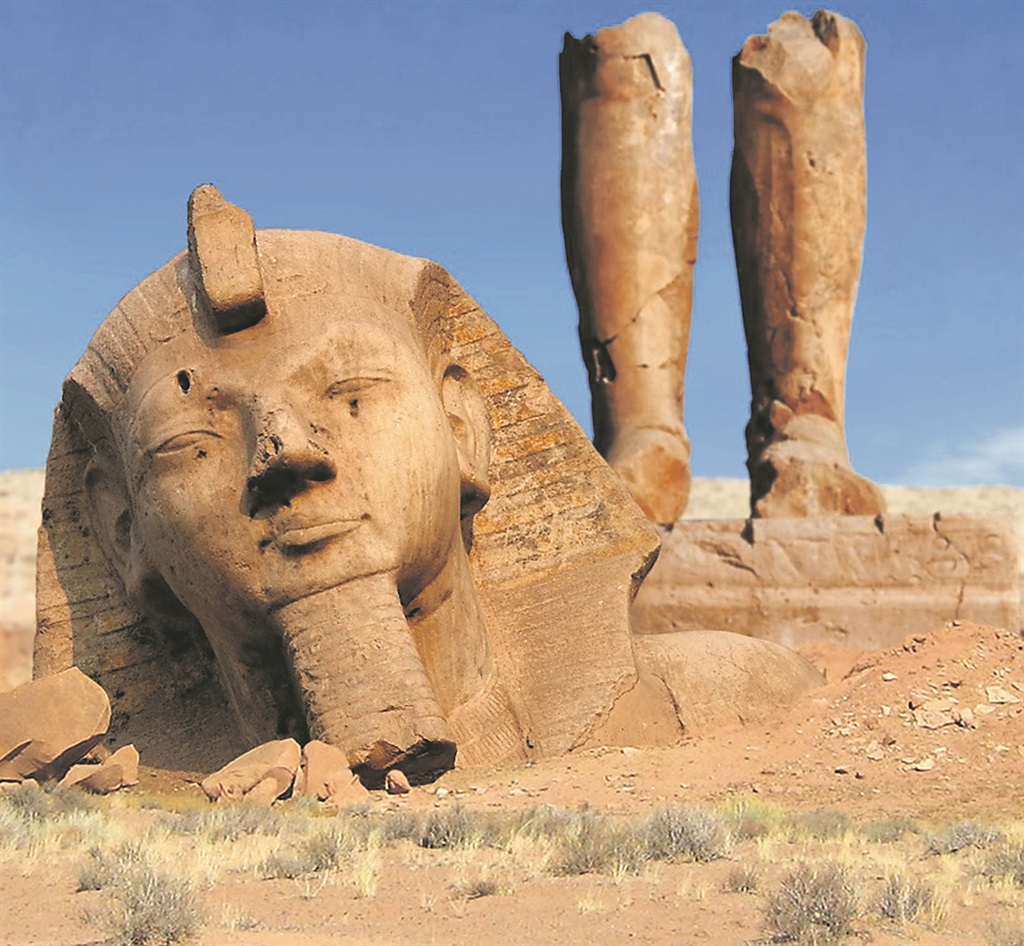
I met a traveller from an antique land,

Who said, "Two vast and trunkless legs of stone

Stand in the desert... Near them, on the sand,

Half sunk a shattered visage lies, whose frown,

And wrinkled lip, and sneer of cold command, 

Tell that its sculptor well those passions read

Which yet survive, stamped on these lifeless things,

The hand that mocked them, and the heart that fed;

And on the pedestal, these words appear:

My name is Ozymandias, King of Kings;

Look on my Works, ye Mighty, and despair!

                                                                        Behance

Nothing beside remains. Round the decay

Of that colossal Wreck, boundless and bare

The lone and level sands stretch far away."

                                                          mudpuddle soup - WordPress.com

The Poet: Percy Bysshe Shelley (1792 - 1822)

Shelley was one of the best known of the Romantic poets, loved for the themes in his poetry, such as a love of nature, ideal love, brooding melancholy, the freedom of the imagination and spirit and the like. His literary treasure trove is remarkable even though, sadly, he drowned at the young age of 29. His contemporaries were luminaries like Lord Byron, Leigh Hunt and Thomas Love Peacock. His writings won the admiration of people like Mahatma Gandhi, Karl Marx and Bernard Shaw. Shelley is best known for his poems like 'Ode to the West Wind', 'To a Skylark' and 'Ozymandias'.

'Ozymandias' refers to Ramses II, the Egyptian Pharaoh who ruled with an iron hand in the 13th century BC. Three voices are heard in the poem - those of the poet, the traveller and Ozymandias himself. The poem is written in the form of a Petrarchan sonnet. 

                                                                     Pinterest

The traveller tells the poet about two giant legs that stand in the desert, without a torso.  Alongside on the sand, half buried, lies a stone head that is damaged. There is a frown and a sneer on the face, so well read by the sculptor. These expressions prove the arrogance of the ruler who took more from the people he ruled over than he gave. 

On the pedestal, an inscription reveals the name of Ozymandias and his boastful request to the Mighty, the rulers of the world, to look upon his architectural achievements and despair of ever emulating them. 

These words are ironic, because as one looks around, there is nothing left of those achievements. The huge statue, ruined beyond repair, is termed as a colossal Wreck. It lies, half buried, in the lonely and level sands that stretch for miles around.

Shelley mocks at the boastfulness of the erstwhile powerful monarch who tyrannizes his subjects. Over time, tyranny and boasts come to an empty end, just as the giant statue that now lies in ruins, a travesty of its past glory.

                                                                 Poetry Foundation

This post is a part of #BlogchatterA2ZChallenge2021

https://www.theblogchatter.com

#BlogChatterA2Z #BlogChatterA2Z2021


Friday, April 16, 2021

Night of the Scorpion by Nissim Ezekiel - Poetry: The Best Words in the Best Order - #BlogchatterA2ZChallenge2021

 NIGHT OF THE SCORPION 

NISSIM EZEKIEL

                                                                      Beaming Notes

I remember the night my mother

was stung by a scorpion. Ten hours

of steady rain had driven him

to crawl beneath a sack of rice.


Parting with his poison - flash

of diabolic tail in the dark room -

he risked the rain again.


The peasants came like swarms of flies

and buzzed the name of God a hundred times

to paralyse the Evil One.


With candles and with lanterns

throwing giant scorpion shadows

on the mud-baked walls

they searched for him: he was not found.

They clicked their tongues.

With every movement that the scorpion made his poison

 moved in Mother's blood, they said.


May he sit still, they said

May the sins of your previous birth 

be burned away tonight, they said.

May your suffering decrease 

the misfortunes of your next birth, they said.

May the sum of all evil 

balanced in this unreal world


against the sum of good

be diminished by your pain.

May the poison purify your flesh


of desire, and your spirit of ambition,

they said, and they sat around

on the floor with my mother in the centre,

the peace of understanding on each face.

More candles, more lanterns, more neighbours,

more insects, and the endless rain.


                                                             SlideServe

My mother twisted through and through,

groaning on a mat.

My father, sceptic, rationalist,

trying every curse and blessing.

powder, mixture, herb and hybrid.

He even poured a little paraffin 

upon the bitten toe and put a match to it.

I watched the flame feeding on my mother.

I watched the holy man perform his rites to tame the poison with an 

incantation.

After twenty hours 

it lost its sting.


My mother only said

Thank God the scorpion picked on me

And spared my children.

                                                               Quotefancy

The Poet: Nissim Ezekiel (1924 - 2004)

Nissim Ezekiel was an Indian poet of Jewish descent who brought out some popular volumes of poetry collections. He was even described as 'the father of post-Independence Indian verse in English'. He wore myriad caps as a teacher, broadcaster, actor, director, editor and critic. He enhanced the influence of Indian English poetry through his modernist techniques, moving beyond themes that were spiritual and oriental to those that encompassed wider societal themes. He was influenced by the writings of  T.S. Eliot and Ezra Pound. Today, his poems are used in NCERT and ICSE textbooks.

'Night of the Scorpion' is one of Ezekiel's most popular poems. In the poem, the poet describes one rainy night when his mother was bitten by a scorpion. The villagers came in hordes to help the family. They looked for the creature everywhere, but could not find him. They chanted the name of God and hoped that the mother's sins would be burnt away, and that the pain of the poison would absolve her of the sufferings in her next birth as well.

The father was a rationalist, but he could not bear to see his wife in pain. Willing to try every remedy, he even poured some paraffin on her bitten toe and set it on fire. The holy man performed his rites.

However, after twenty hours went by, the sting was removed, the poison lost its power and the mother recovered. In the selfless manner of a mother, she thanked God that the scorpion had bitten her and spared her children.

The poem is couched in simple language, but it reveals a number of superstitions and attitudes that are commonly found in villages and small towns. Religion plays a significant role in the way people handle traumatic situations.

                                                              IndiaContent

This post is a part of #BlogchatterA2ZChallenge2021

https://www.theblogchatter.com

#BlogChatterA2Z #BlogChatterA2Z2021


BECAUSE IT'S YOU - LOVE IN INDORE BOOK 2 BY VENUKA GOYAL

  Amazon.in What happens when an old flame comes back into one’s life, inflaming all the passion that had lain dormant over the years. That ...